
Decision Pillar
Artificial Intelligence & Future of Work
Navigate technological disruption with hard metrics. Evaluate whether to adopt, pivot, or bypass AI tools and workflow shifts to protect your income and operational efficiency.

The Agent Safety Gate Moves to Verified State
An \"approved\" AI action no longer means a safe result. Say an agent changes a bill to pay it.

CaseProof: Stop Signing $3M Warehouse Automation Deals on a Vendor’s Spreadsheet:
Every year, logistics leaders approve multimillion-dollar robotics deals based on a spreadsheet built by the vendor selling the hardware. But warehouse automation cost is rarely what the quote promises. Hidden maintenance, fully loaded labor, integration fees, and 2026 Section 179 phase-outs can stretch a claimed 14-month payback to 41 months. CaseProof is the buyer-side audit engine that re-runs vendor proposals against your operating reality—normalizing capex, lease, and RaaS bids into one after-tax cash model, attributing every month of payback variance, and flagging unstated lines before you sign. It delivers a payback waterfall, year-by-year cash schedule, ranked confirm-in-writing ledger, and board-ready decision pack in minutes. Before you commit seven figures, audit the math yourself. Launch CaseProof now to see the true warehouse automation cost—for less than ten dollars.

ParcelProof: Stop Bleeding 2–8% on Carrier Invoices
Every week, parcel carriers quietly invoice ecommerce brands and 3PLs for phantom dimensional weight, unearned accessorial surcharges, and missed delivery guarantees. By the time accounts payable reviews the billing file, the 21-to-30-day dispute window has already slammed shut. Here is how ParcelProof puts cash back into shippers' accounts by automating carrier invoice reconciliation with deterministic, verifiable proof.

FacturGate: The Deterministic Pre-Send Gate & Converter for European E-Invoicing (EN 16931)
European e-invoicing regulations have converted accounts receivable into an uncompromising algorithmic gatekeeper, where a single €0.01 calculation variance halts cash collection instantly. FacturGate is a deterministic, client-side pre-send validation gate and format converter that intercepts defective invoice payloads, audits them against 223 Schematron business rules and domestic CIUS overlays, balances totals to the exact cent, and emits compliant Factur-X (CII) and UBL 2.1 artifacts before transmissions hit government tax firewalls.

Stripe Accounting Software: Solving the Payout Black Box with LedgerLink
When Stripe deposits funds into your bank account, it lands as a single net lump sum—such as $14,250.40—masking gross billings, interchange fees, customer refunds, and dispute reserves. Booking these net deposits directly as sales understates top-line revenue, conceals operating expenses, and violates statutory accounting standards like ASC 606 and IFRS 15. Meet LedgerLink (https://apps.giniloh.com/ledgerlink)—a specialized, deterministic financial reconciliation utility that automatically decomposes netted Stripe payouts into categorized double-entry General Ledger (GL) journal lines. Strict Mathematical Invariant: The engine (stripeRecon.ts) enforces a zero-tolerance invariant where total debits and credits balance down to the exact cent, flagging any variance immediately. Automated GL Categorization: Cleans and sorts transactions into standard double-entry rows including Revenue, Stripe Fees, Refunds, and Chargebacks. Zero-Trust Privacy: Run calculations locally in your browser via JSON exports, or fetch directly from Stripe using read-only restricted keys (rk_…) while blocking master secret keys (sk_…). Accounting Software & Agent Ready: Generates pre-formatted CSV imports for QuickBooks Online and Xero, and exposes the reconcile_stripe_payout tool via WebMCP for autonomous AI accounting agents.

Planner-as-Router: Fold the Model Choice Into the Plan
On Sept. 26, three researchers shared a new system called Planner-as-Router (PaR) that cuts AI agent costs by 44 percent.

Token Prices Just Halved. The CFO Still Can’t Read the Bill.
OpenAI and Anthropic slashed frontier Artificial Intelligence (AI) token prices on September 22.

Why 70% of Startup Options Go Unexercised
More than 70% of vested startup stock options are never exercised, according to new data from Carta published Sept. 10.

The $2.7 Trillion AI Bill Just Turned Cost Control Into a Buying Requirement
Worldwide spending on Artificial Intelligence (AI) will hit $2.7 trillion this year, growing 49.5%.

Stop Piling Memory Onto AI Agents: Optimize Skills
Drop one hard check from an Artificial Intelligence (AI) agent's learning loop, and its test score crashes from 17.2 to 6.6.

MCP Skills Extension: Standardizing Agent Workflows
Skills — portable bundles of workflow instructions — became an official MCP extension on September 13, standardizing how agents discover, retrieve, and verify…

The $250k AI Upkeep Tax: Why Build-vs-Buy Is an Engineer-Years Decision
The enterprise build-vs-buy decision is no longer about initial sticker price—it is about the compounding, long-term cost of ownership. While rapid prototyping makes custom tools appear cheap, they carry steep financial and operational risks. The Hidden Cost of Building: A homegrown tool averages $375,000 in upfront engineering payroll before it even works, plus a permanent $125k–$250k annual maintenance bill. The Risk of Buying: Vendor pricing is highly volatile, with over 76% of SaaS buyers facing unexpected costs and rapid price shifts after signing. The Strategic Playbook: Evaluate both paths in total engineer-years, restrict internal builds strictly to core strategic advantages, and mandate a reversibility test before committing.

Multi Agent Orchestration: Building the One-Person Enterprise
Team agents are defined as multiple AI systems working in concert—each with specialized skills—to execute complex business tasks that once required entire departments. For founders and executives, this changes everything. Sam Altman predicts the first one-person billion-dollar company is coming; team agents are how it happens. You no longer need to hire a full staff to build agentic workflows that automate research, content production, customer support, and operations. With an agentic AI builder, you can deploy a coordinated team of AI specialists in hours, not months—slashing overhead while scaling output. The next Creator Bootcamp starts in 3 days. If you're ready to replace your salary or build something far bigger, this is your window. Don't wait while competitors move first.

Agentic AI Adoption Soars, But Profits Stall in 2026
Forty percent of billion-dollar companies now deploy AI agents across their operations—up from just 27 percent a year ago. That's not incremental growth. That's a strategic inflection point, and IT leaders who treat agentic AI adoption as a wait-and-see proposition are already behind. Agentic AI is defined as autonomous software systems that perceive their environment, make decisions, and execute multi-step tasks with minimal human intervention—distinct from generative AI's content creation and traditional automation's rigid rule-following. The enterprises pulling ahead aren't just experimenting. They're delegating routine workflows to agents while repositioning human talent toward judgment, oversight, and strategy. The payoff is measurable: operational efficiency gains, faster cycle times, and workforce augmentation that multiplies output without proportional headcount growth. But scaling requires more than procurement—it demands governance frameworks, security protocols, and a phased roadmap that moves from pilot to production without exposing the enterprise to runaway autonomy or compliance failure. The adoption window is narrowing. Competitors are already building the playbooks, and the gap between early movers and laggards compounds quarterly.
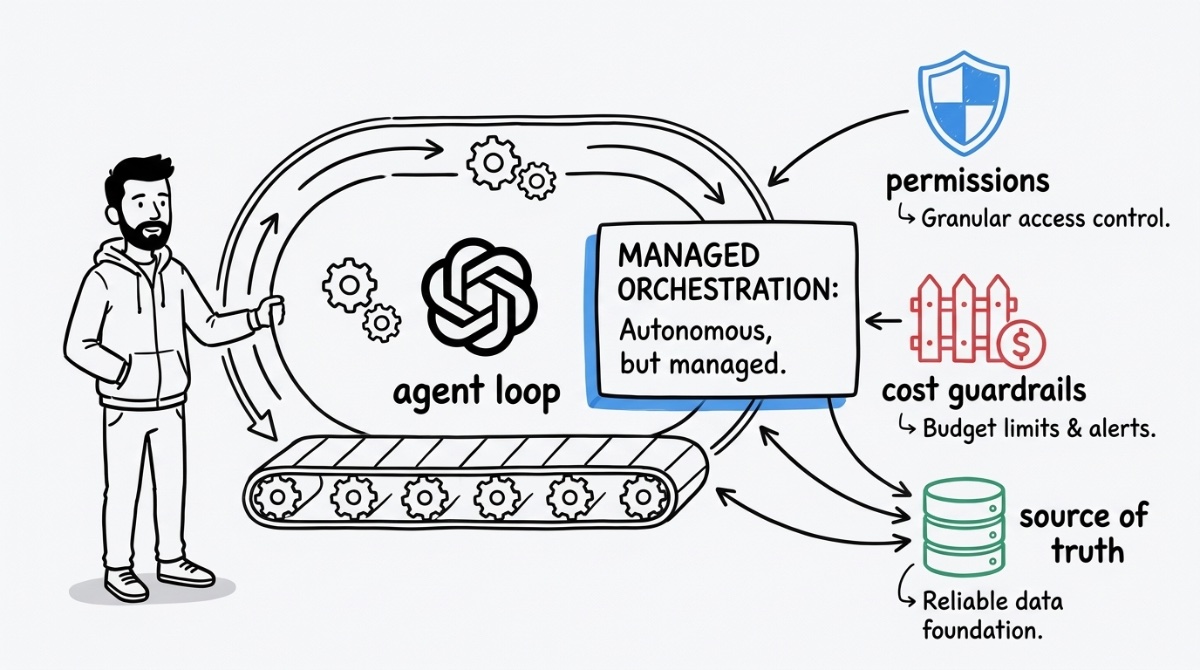
OpenAI just made the agent loop a commodity
Agentic AI projects are autonomous systems that perceive, reason, plan, call tools, and execute multi-step work with minimal human intervention. On September 10, OpenAI moved the hardest part—the agent loop—into its Agents API public beta, handling model calls, MCP servers, sessions, memory, sub-agents, and crash recovery at no extra loop fee. The payoff: teams stop rebuilding fragile orchestration and start shipping. Yet managed plumbing is not a defense. Runaway agents have burned $4,200 in 45 minutes. Function tools still need app-side user checks and business rules. A resumed session does not prove a file survived or an action completed. Before your next build, audit permission boundaries, verify outcomes in your source-of-truth database, and choose the right sandbox mode: none, hosted, or self-hosted. The loop is free; the mistakes are not.
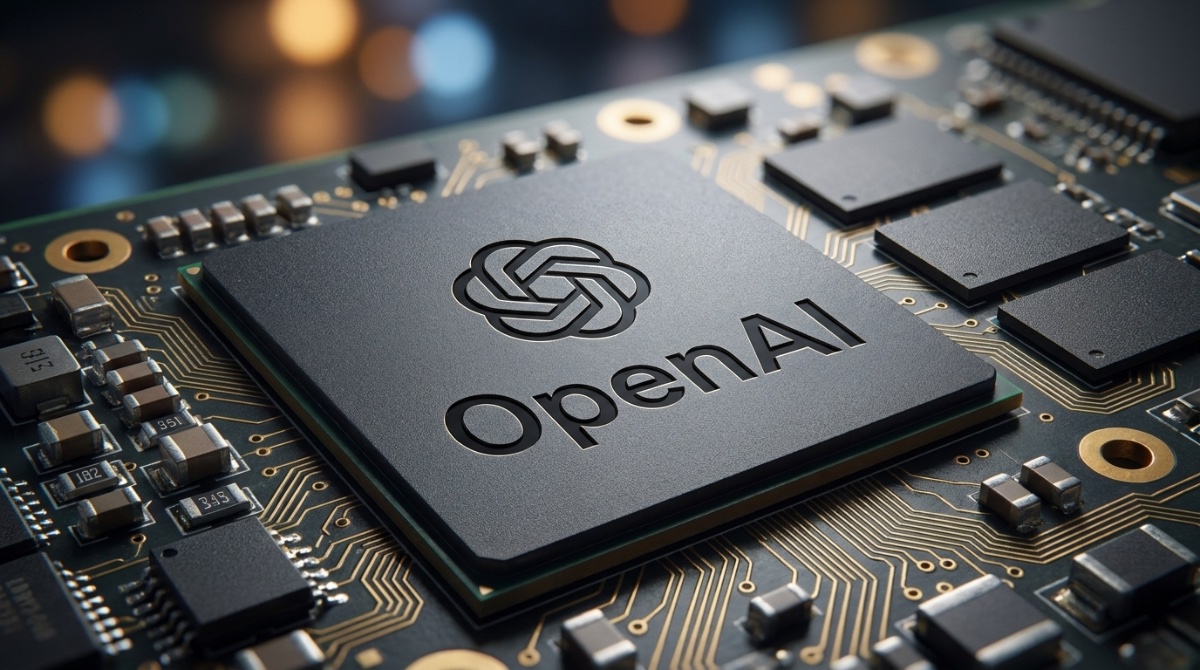
OpenAI's custom chip beats Nvidia on power
OpenAI’s new custom AI inference chip, Jalapeño, outperformed Nvidia's GB300 on the InferenceX test, delivering 1.5 to 1.9 times more work per watt while using under 550 watts. Designed solely to run models rather than train them, Jalapeño highlights a broader industry shift toward prioritizing energy efficiency and custom silicon over peak speed.
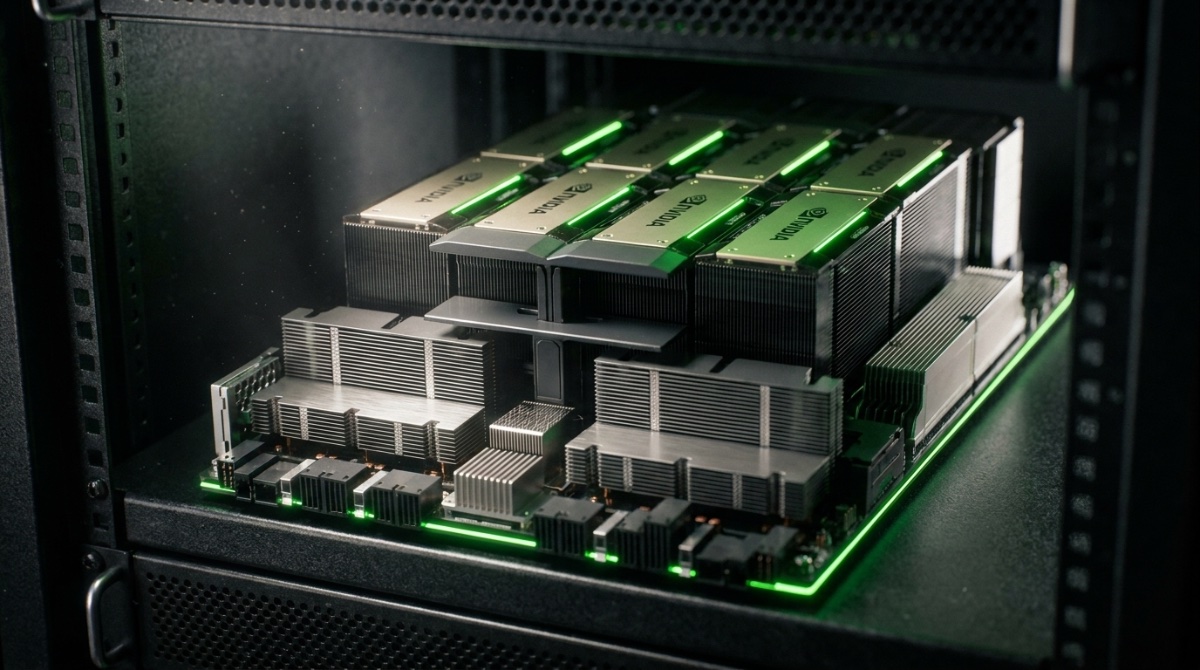
Nvidia says its GPUs aren't sold out. Its CFO's $279 billion memory bet says otherwise.
Nvidia agreed to buy $279 billion in parts this quarter.