

The Strategy Brief
- The AI Career Radar tool takes a mountain of confusing labor statistics and turns it into a practical, easy-to-use playground for building a resilient career.
- Careers requiring physical dexterity and the ability to navigate unpredictable environments, such as skilled trades, remain highly resistant to automation due to the complexity of the physical world.
- Roles centered on deep empathy and emotional intelligence, including healthcare and therapy, provide a level of human connection and nuanced understanding that software cannot replicate.
- Professional positions that demand licensed accountability and high-stakes ethical judgment offer a natural defense against AI, as machines cannot be held legally or morally responsible for outcomes.
- Future-proof success involves shifting from a mindset of competition with technology to one of partnership, using AI to handle data-heavy tasks while humans focus on strategy and purpose.
Introduction
Building a resilient career means focusing on roles that demand exactly what algorithms lack: physical dexterity, complex human judgment, and licensed accountability. While this guide outlines the strategies and platforms to help you land these roles, you can also navigate the market using hard data. My free AI Career Radar tool evaluates the day-to-day tasks of nearly 1,000 official US occupations to generate an “AI Vulnerability Index,” instantly revealing the most AI-proof jobs available today.
Have you ever wondered what your job will look like in one, five, or ten years? Or thought, “Is my job actually on the line here?”
I want you to know that I’ve been right there with you. I’ve had those same late-night thoughts, trying to figure out if the skills I’ve spent years building are suddenly going to become old news because of a piece of software.
It’s a heavy thing to carry around, and it’s something almost everyone I talk to is feeling right now, whether they’re just starting out or they’ve been in their career for decades. The anxiety isn’t just a vague feeling anymore, either—it’s in the headlines every single day.
We’ve seen tech giants pivoting fast: Microsoft just announced massive layoffs, following aggressive cuts earlier this year from Meta and Cisco, all slashing thousands of roles to shift investments toward AI. Even software mainstays like Intuit slashed nearly a fifth of their workforce, explicitly citing a shift toward automation. This wave has already driven nearly 50,000 AI-linked job cuts this year alone.
Yet, if you step back to look at the big picture, there’s a strange disconnect: the national unemployment rate hasn’t shown a drastic, catastrophic spike to mirror these headlines. It’s holding relatively steady, proving that this pain is largely concentrated in corporate tech hubs rather than a total economic collapse. But when you’re looking at the numbers inside your own industry, it still hits incredibly close to home.
I remember talking to my friend Sarah last week. She’s been a graphic designer for ten years and she was genuinely worried that a bot could just “click a button” and do her whole job. We sat there with our coffee, and I could see the stress in her eyes. It’s not just about the money; it’s about our identity and the work we’re proud of. That’s why I wanted to dive deep into this topic and understand what an AI-proof job actually looks like.
Take Control of Your Career with AI Career Radar
Wondering how AI will actually impact your day-to-day work? AI Career Radar takes the guesswork out of your future. Instead of making sweeping generalizations about entire industries, it breaks down over 1,000 specific jobs task-by-task. Backed by solid, official data from the U.S. Department of Labor, it shows you exactly which parts of your job are safe from automation and which might be at risk.
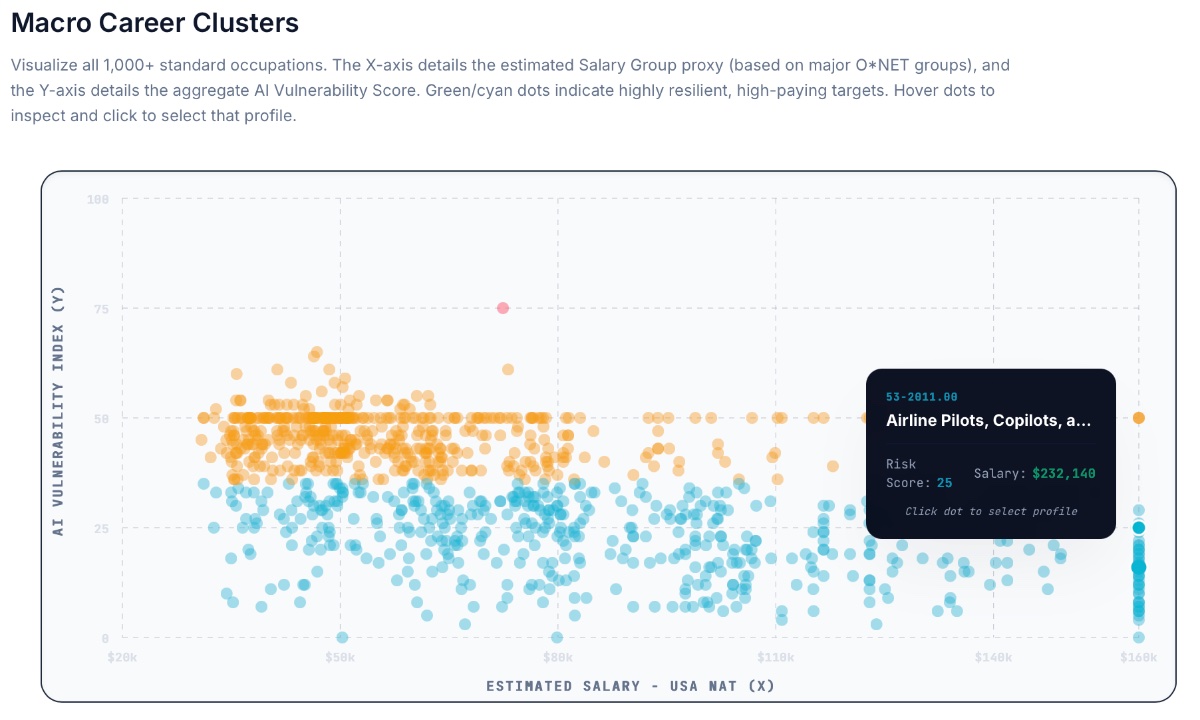
Here is how you can use it to bulletproof your career:
-
Check Your Risk: Look up your exact job title and instantly get a simple, easy-to-read chart showing the AI-risk level for your specific daily duties.
-
Future-Proof Your Skillset: Play around with the interactive sliders to reshape your workday. You can watch your personal vulnerability score drop in real-time as you shift your focus away from routine chores and lean more into strategy, creativity, or human connection.
-
Plan Your Next Move: Thinking about pivoting? Explore the visual career map to easily spot new, related paths that offer a sweet spot of high pay and low AI risk.
Essentially, it takes a mountain of confusing labor statistics and turns it into a practical, easy-to-use playground for building a resilient career.
The Search for Real Answers
That nagging question was the whole reason I decided to roll up my sleeves, research and build a simple powerful tool and really dig into this. I didn’t want to just read the scary headlines or listen to the loudest voices on social media. I wanted to find the real stories and the hard data to see what’s actually happening behind the scenes.
And honestly? After this research and talking to people who are right in the thick of it, here’s what I’ve found: the conversation is way more interesting and a lot more hopeful than the panic makes it seem. It’s not a simple story of “robots win, humans lose.”
It’s much more about how we work together and where our unique human strengths really shine. While it’s true that some roles are going to change in big ways, or even go away as we know them, there are so many other jobs that have these built-in “natural defenses.”
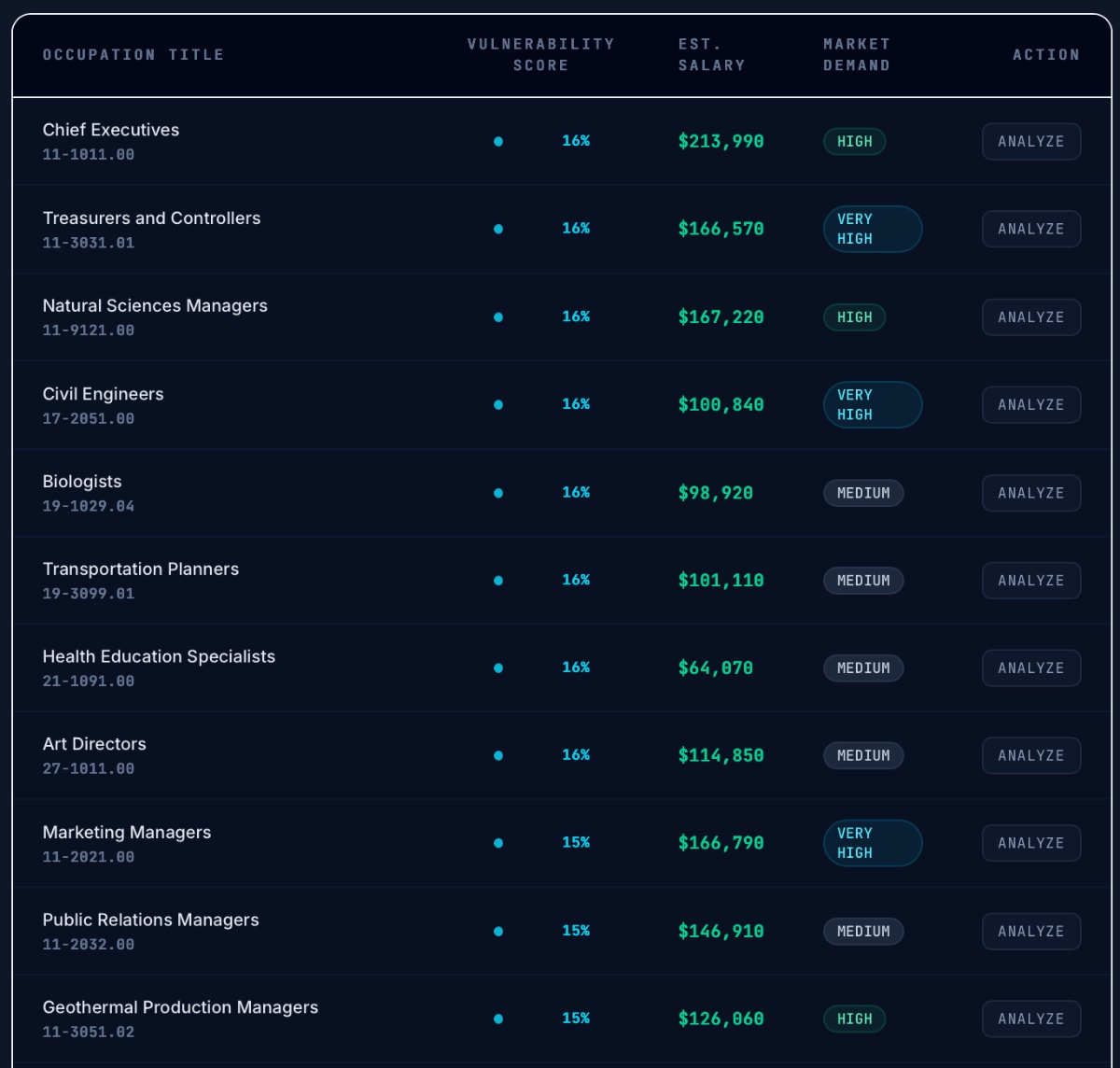
The Three Natural Defenses Against Automation
When we talk about these defenses, we’re usually looking at three big areas that are really hard for a computer to copy. These aren’t just small hurdles for AI; they are fundamental parts of being human that technology hasn’t mastered yet and likely won’t for a long time.
The Physical Safe Zone: Messy Reality
Let’s talk about that physical side for a minute, because I think it’s one of the most overlooked “safe zones.” Think about a plumber or an electrician. If you’ve ever had a pipe burst in the middle of the night in an old house, you know how chaotic that situation is.
It’s never a clean, easy fix like you see in a textbook. Every house is built a little differently, every pipe is in a slightly different spot, and the “workspace” is usually a cramped, wet crawlspace that hasn’t been touched in thirty years.
An AI can’t crawl under your floorboards, wiggle through a tight gap, and figure out exactly why a 50-year-old joint is leaking. It doesn’t have the hands, the sense of touch, or the ability to adapt to a world that isn’t perfectly mapped out in a digital grid.
The Limits of Robotic Precision
Doing “messy” work in the real world is incredibly hard to automate. I was watching a recent 60 Minutes episode about Boston Dynamics Atlas humanoid robots, and they pointed out that while training humanoid robots is getting much easier, everyday tasks are still a massive hurdle. Something as simple as brewing and carrying a cup of coffee isn’t trivial for a robot; they can’t just be programmed with rigid rules, they actually have to learn how to do it.
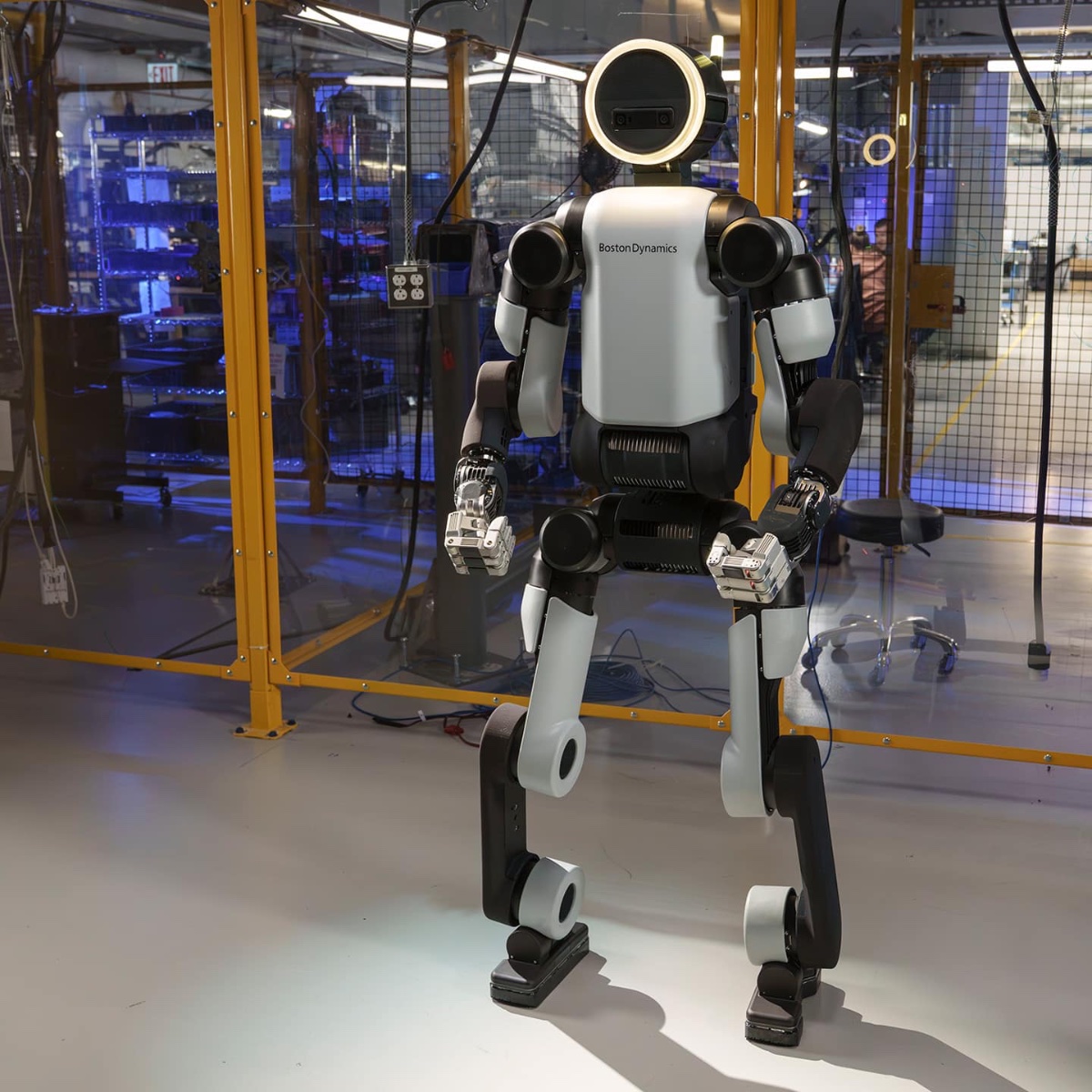
Now imagine that robot trying to fix a broken HVAC unit in a dusty attic during a heatwave. We’re nowhere near that being a reality. Then there’s the emotional side of things, which is where we really have the upper hand.
Think about a nurse, a therapist, or even a great kindergarten teacher. Sure, an AI can give you a list of medical symptoms or suggest a breathing exercise from a database, but it can’t look you in the eye and know that you’re holding back tears because you’re scared. It can’t offer the kind of empathy that comes from shared human experience.
The Reality of AI Taking Jobs
I remember when I first started to experience the power of LLM (Large Language Models) in 2024. I watched, slightly mesmerized and mostly terrified, as it generated a full, coherent, 800-word article about my gardening hobbie in about 15 seconds. That was a task that usually took me at least two or three hours of solid focus. My first thought wasn’t “wow, this is a cool tool.” It was more like, “well, what am I supposed to do now?”
I think most of us have had some version of that “oh no” moment lately. The headlines about ai taking jobs are everywhere, and they’re loud, and they’re honestly pretty scary. It feels like every time you open a news app, there’s another prediction about how many millions of roles will be gone by next Tuesday.
Finding Safe Ground
I also realized something important. The real secret to staying relevant isn’t about trying to find a job that a robot literally cannot do. It’s about finding those ai proof jobs that are built on a specific mix of human skills that are incredibly hard to automate effectively.
What Actually Makes a Job “AI-Proof”?
I’ve realized that the term “AI-proof” is a bit of a tricky one. If I’m being totally honest with you, I don’t think any job is 100% bulletproof. Technology touches everything eventually, just like the internet changed every single job thirty years ago.
However, some roles have what I like to call “natural defenses.” Think about a surgeon for a second. Sure, they might use robotic tools to help them be more precise, but the job itself requires incredible physical dexterity and the ability to work in a totally unpredictable environment.
Imagine a surgeon in the middle of a procedure when something unexpected happens—a sudden bleed or a weird anatomical quirk they didn’t see on the scan. They have to make a high-stakes decision based on what’s happening in front of them in real-time . We want a human in that room because a human understands the value of the life on the table.
Thriving in the New Market
What is happening in the real world, beyond the scary headlines? After talking to a bunch of recruiters, I’ve realized something pretty cool:
AI-proof jobs aren’t about hiding from technology or pretending it doesn’t exist. They’re actually about riding the wave. I’ve noticed that the roles really taking off right now aren’t the ones that AI can’t touch. Instead, they’re the ones where people work right alongside it, like a team.
The folks who are thriving are the ones managing the tools, building the systems, or even selling the vision of what’s possible. It’s not a competition where one of us has to lose; it’s a partnership. Once you see it that way, the whole job market starts to look a lot less like a scary sci-fi movie.
The Driver’s Seat: Strategy and Purpose
Think about it like this: if you’re on a road trip, the AI is like a really fancy GPS. It can tell you the fastest way to get somewhere, but you’re still the one who decided to go on the trip in the first place. You’re the one who knows that your passenger gets car sick on curvy roads.
I can use an AI to help me write a bit of code or draft a basic email, but the AI doesn’t know why I’m writing it. It doesn’t know my boss’s quirks or our company’s long-term goals. Someone still has to decide what to build and why it matters to the people using it.
My Biggest Takeaway on “AI-Proof” Jobs
In my view, the term “AI-proof” is a bit of a trick; it implies a total immunity that just doesn’t exist. I like to look at career resilience as a raincoat rather than a bomb shelter. A bomb shelter is where you hide, hoping the world won’t change around you. A raincoat, though, is what you put on so you can keep walking right through the storm.
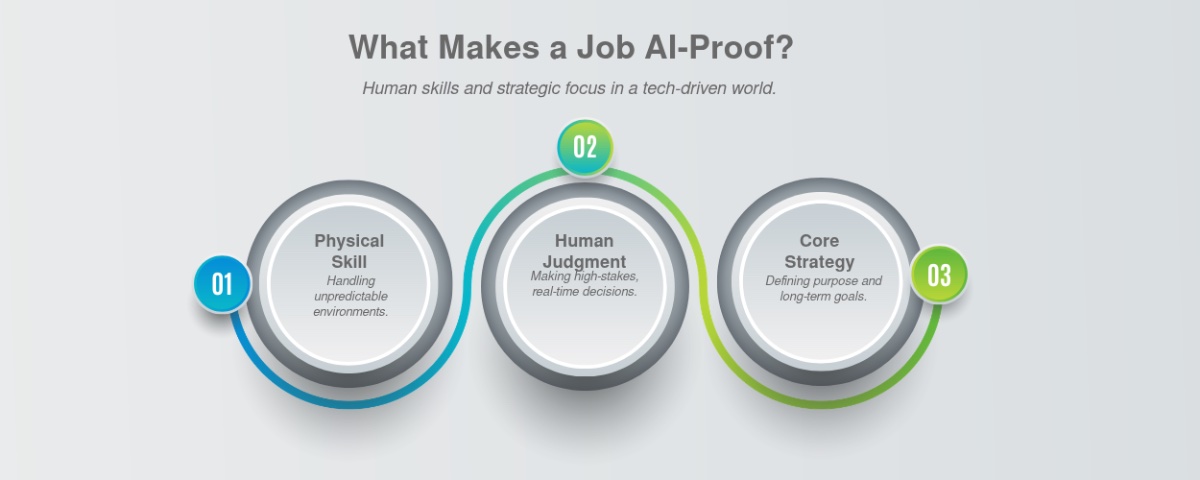
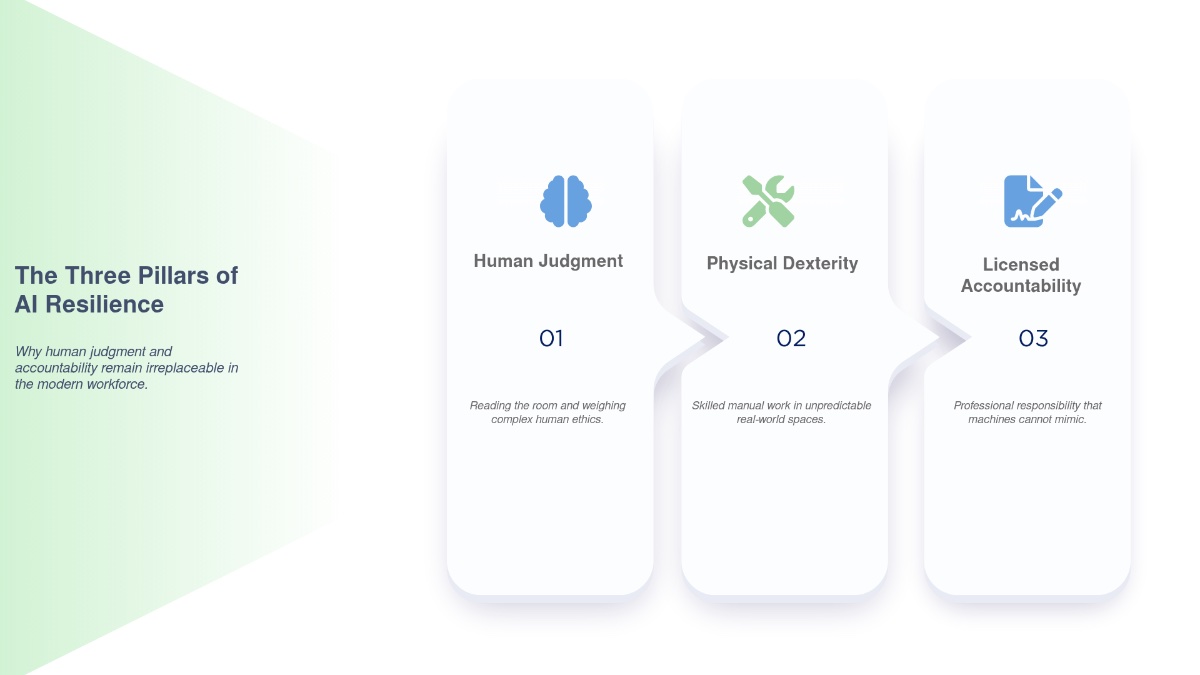
Looking at the landscape of work today, the roles with the strongest natural defenses are built on three pillars: physical dexterity, human judgment, and licensed accountability. Each of these acts as a unique shield, protecting the spaces where an algorithm simply can’t replicate human value.
The Power of Human Judgment
AI is amazing at finding patterns in huge piles of data, but it’s not great at “reading the room.” I have a friend who works in human resources. She was telling me about a time she had to deliver some tough news to an employee whose family was going through a hard time.
An AI could have written the script, but it couldn’t see the look in that person’s eyes. It didn’t know when to stop talking and just offer a cup of coffee or a moment of silence. That ability to weigh complex, often conflicting human emotions and ethical nuances is something we bring to the table that a machine just can’t mimic yet.
Whether you are a nurse deciding which patient needs help first in a busy ER or a judge thinking about the spirit of the law rather than just the letter of it, that judgment is your superpower. Finally, there’s the big one: licensed accountability.
FAQ
What core characteristics make a job resistant to AI automation?
Jobs with ‘natural defenses’ typically require physical dexterity in unpredictable environments, high levels of emotional intelligence, or licensed accountability. These roles rely on human judgment and the ability to navigate complex, non-linear situations that algorithms cannot master.
Why are skilled trades like plumbing and electrical work considered secure?
These professions involve working in messy, unmapped physical spaces that require tactile problem-solving and adaptability. Current robotic technology lacks the fine motor skills and sensory feedback needed to fix unique issues in varied environments like old crawlspaces or attics.
How does emotional intelligence protect roles in healthcare and education?
While AI can process medical data or provide lesson plans, it cannot experience or mirror genuine human empathy. Professionals like nurses and teachers succeed by connecting with people on a personal level and responding to subtle emotional cues that machines cannot detect.
What role does ‘licensed accountability’ play in job security?
Certain high-stakes professions, such as surgery or law, require a human to be legally and ethically responsible for outcomes. Because AI cannot be held liable for its actions, professional judgment and accountability remain strictly human domains.
Is it better to avoid AI tools to remain relevant in the workforce?
The most resilient careers involve working alongside AI rather than hiding from it. By using technology as a digital assistant for data and drafts, professionals can focus their energy on high-level strategy, purpose, and the human nuances that drive results.
Can AI eventually replace strategic leadership and management?
Leadership requires understanding company culture, long-term vision, and the specific quirks of a team, which are contexts AI lacks. While AI can suggest the fastest route to a goal, a human leader must still decide the destination and ensure the team’s well-being.
References
[1] In this guide, we break down AI-proof tech roles, automation-resistant careers beyond tech, and the.
[2] Which jobs will survive AI? Data-backed guide to AI-proof careers, the skills you need, and a 90-day.
[3] Explore 7 AI-proof careers where human creativity, critical thinking, and leadership skills continue.
[4] A complete guide to building an AI-powered job search workflow in 2026: discovery, matching, safe au.
[5] Yes it has already taken over mine not because ai is that advanced but it gave an excuse to greedy c.