
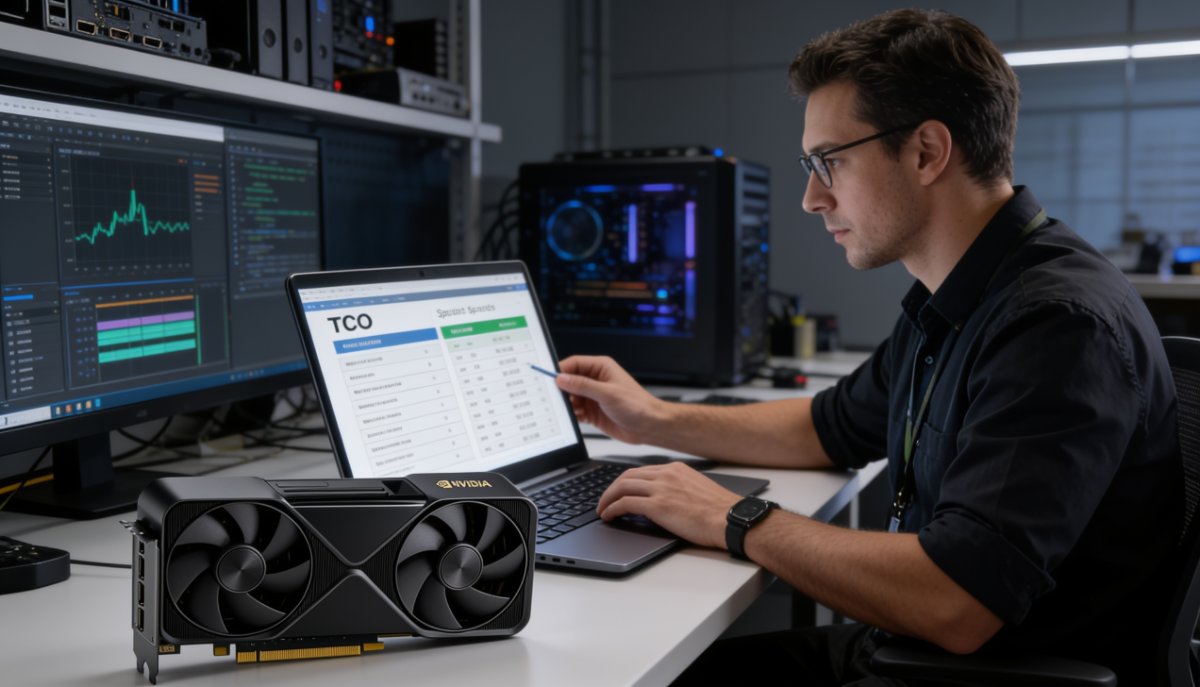
The Hidden Cost of AI Hardware: Why a TCO Analyzer Is Your Secret Weapon
The Strategy Brief
- Calculate the Total Cost of Ownership by accounting for hidden expenses such as electrical retrofitting and cooling infrastructure, which are necessary to support the high power draw of flagship professional GPUs.
- Utilize the 96GB of GDDR7 VRAM available in top-tier models to process massive datasets and large language models locally, eliminating the need for data-center clusters or external APIs.
- Choose professional-grade hardware over consumer alternatives when your workflow requires ISV certifications and ECC memory to ensure stability during 24/7 mission-critical operations.
- Evaluate the financial break-even point between purchasing and renting, noting that ownership typically becomes more cost-effective than cloud services within 24 months for workloads with over 70% utilization.
Introduction
Navigating the high-end compute landscape right now is frustrating. It honestly feels like NVIDIA is squeezing independent AI researchers and small VFX studios, practically forcing everyone into a data-center or cloud-rental monopoly.
At the same time, the tech itself is changing the rules. Thanks to blazing-fast PCIe Gen 5 speeds and smarter software frameworks, we don’t even need those physical bridges anymore to get massive performance.
Plus, Apple silicon has stepped up as a genuinely capable alternative at a fraction of the price—though it still forces you to make a tough choice between sheer memory capacity and raw processing speed.
Purchasing professional-grade hardware, such as the NVIDIA RTX PRO 6000 Blackwell, represents a massive capital investment for individuals and enterprise organizations. With a manufacturer’s suggested retail price (MSRP) of approximately $13,000, the unit cost serves as a substantial barrier to entry for many.
For a workstation professional, this isn’t just a purchase; it is a strategic allocation of resources that requires justification. The initial purchase price is merely the first component of a broader financial equation.
Understanding Total Cost of Ownership (TCO)
A comprehensive evaluation of the Total Cost of Ownership (TCO) is essential for determining the long-term viability of the hardware. This analysis encompasses power consumption, thermal management, ongoing maintenance, and asset depreciation.
For a high-performance component like the RTX PRO 6000, which features a 600-watt power draw, the cumulative cost of electricity can represent a significant portion of the operational budget . When a firm buys a fleet of these GPUs, they are also buying into a specific infrastructure requirement.
The 600-watt peak power draw is not a theoretical maximum; it is a baseline for designing power delivery systems. In a standard office environment, a single workstation equipped with dual RTX 6000 cards can easily exceed the capacity of a standard 15-amp circuit.
Infrastructure and Hidden Expenses
This necessitates electrical retrofitting, adding thousands to the deployment cost before the first render even begins. Such hidden costs often catch smaller firms by surprise, turning a hardware upgrade into a facility renovation project.
In the world of AI inference and data science, decision-makers are increasingly required to look beyond upfront capital expenditures (CAPEX). The NVIDIA RTX PRO 4500 Blackwell, for example, offers a distinct economic profile by operating at a modest 165-watt thermal design power (TDP) .
The Economic Imperative of TCO Analysis
The RTX PRO 6000 Blackwell provides a substantial performance ceiling, increasing the available memory to 96GB of GDDR7 and introducing native FP4 support. These features facilitate the processing of increasingly large and complex models .
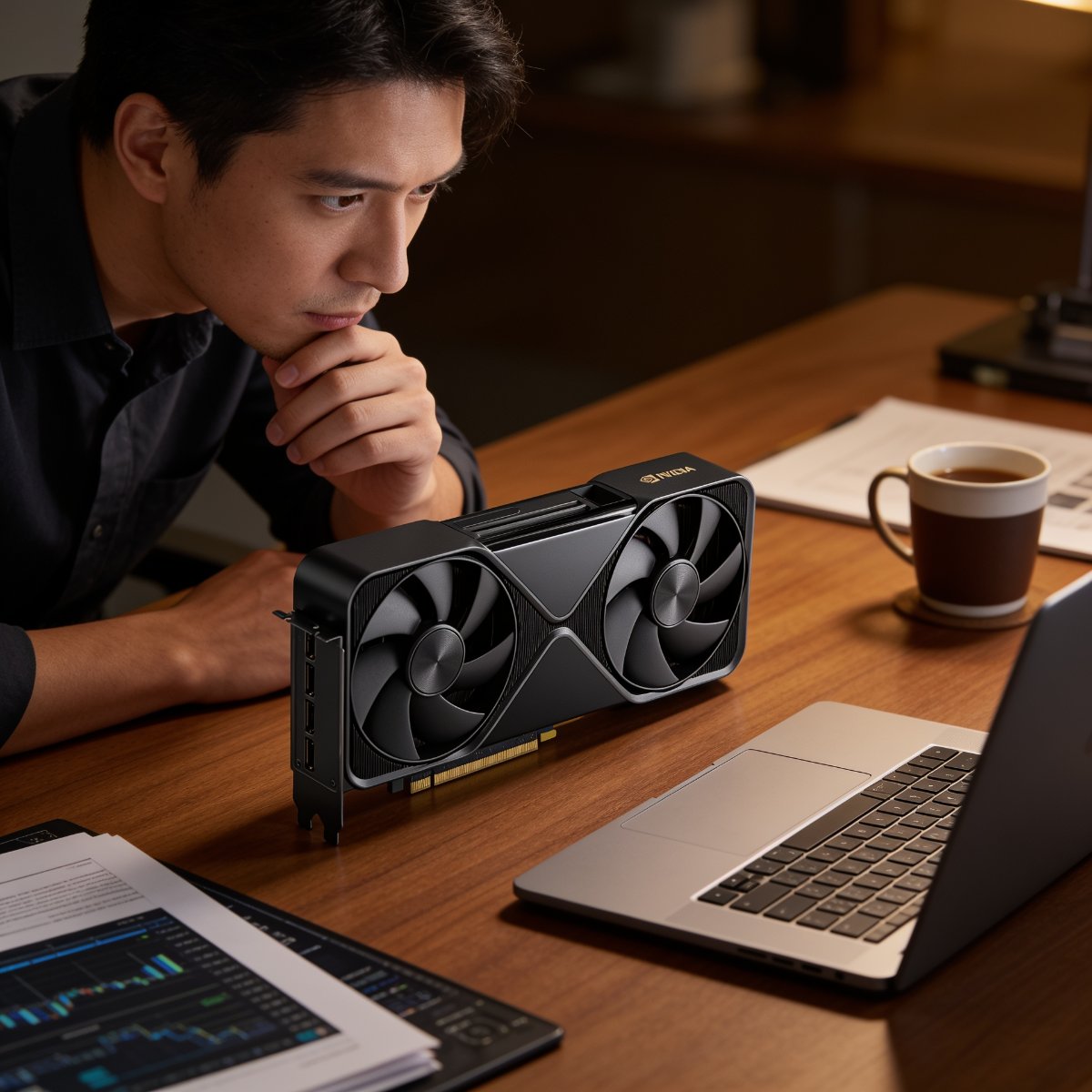
While these capabilities provide a competitive edge, they need a more robust infrastructure for power delivery and heat dissipation. The 96GB frame buffer is particularly important for Large Language Model (LLM) fine-tuning, where memory capacity dictates the maximum size of the training set.
Determining which hardware path offers the most favorable economic outcome requires a granular analysis of specific workload requirements. A firm focusing on edge-based inference might find the RTX 4500 more profitable due to its lower power overhead.
Cooling and Maintenance Challenges
The shift toward Blackwell architecture also changes the math for data center cooling. Traditional air cooling may struggle with the heat density of multiple 600-watt cards in a single chassis.
This introduces the potential need for liquid cooling solutions, which carry their own maintenance schedules and failure risks.
Strategic Decision-Support: The GiniLoh TCO Analyzer
To address the complexities of hardware procurement, the GiniLoh TCO Analyzer serves as a critical decision-support tool. This interactive framework allows organizations to conduct side-by-side comparisons between the outright purchase of GPU hardware and cloud-based compute resources.
The analyzer moves beyond simple price tags to look at the “cost per hour” over a three-to-five-year lifecycle. By inputting specific variables—including acquisition costs and localized electricity rates—users can generate data-driven cost projections.
For many individuals and startups, the “zero-equity” model of cloud renting is attractive because it preserves cash flow. However, the GiniLoh TCO Analyzer often reveals that for sustained workloads, the “break-even” point for an $13,000 RTX 6000 can be as short as 18 months.
Comparative Analysis of Blackwell Professional Models
Decoding the RTX PRO Lineup: Models, Specs, and Their Target Audience
NVIDIA Blackwell RTX PRO Series: Architectural Advancement
NVIDIA’s rollout of the Blackwell-powered nvidia rtx pro series creates a new performance ceiling for professional workstation hardware. This generation moves beyond the previous Ada Lovelace limits, introducing a lineup that includes the RTX PRO 2000, 4000, 4500, 5000, and 6000.
These GPU’s target specific computational bottlenecks in industries ranging from automotive design to molecular biology. The hardware is built to manage high-intensity workloads that vary from compact edge computing to massive AI inference.
The transition to the Blackwell architecture emphasizes higher memory bandwidth and specialized data processing. This shift reflects a broader industry move toward localizing AI development within the workstation environment rather than relying solely on cloud-based clusters.
Architectural Foundation: The Shift to Blackwell
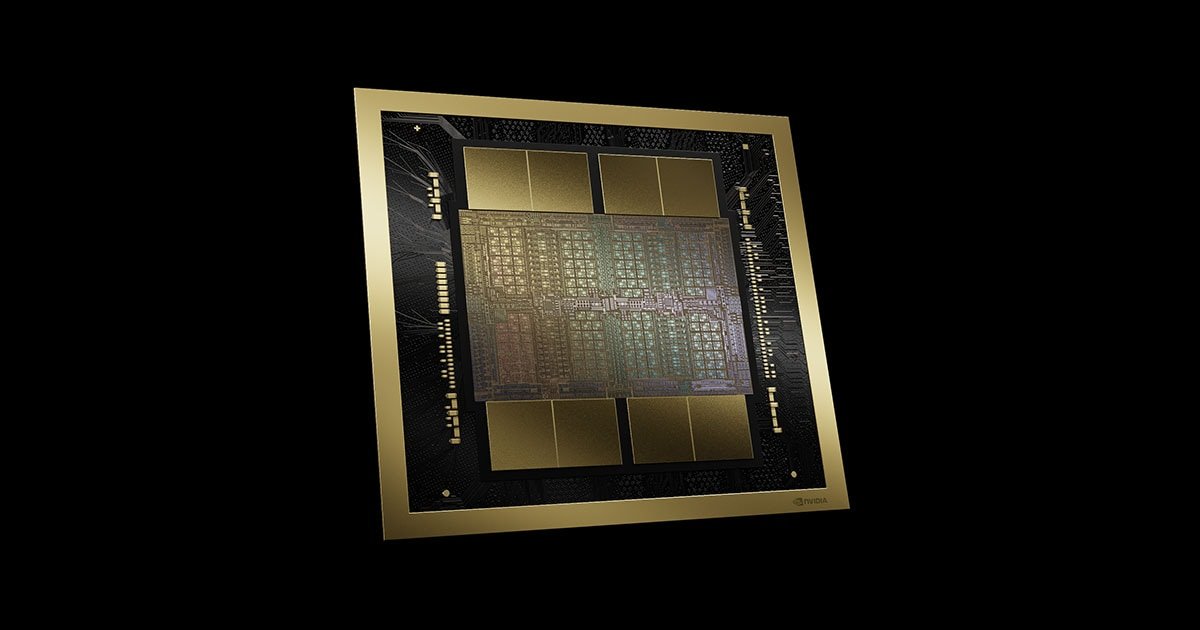
The Blackwell architecture serves as the technical bedrock for this new series. It introduces fifth-generation Tensor Cores and third-generation RT (Ray Tracing) Cores, both of which have been redesigned for higher throughput.
Technical specifications indicate that Blackwell utilizes a refined 4-nanometer manufacturing process. This allows for a significantly higher density of transistors compared to previous 5nm or 7nm nodes.
A central feature of this architecture is the second-generation Transformer Engine. This technology utilizes sophisticated software heuristics to adjust the precision of numerical calculations on the fly, which is critical for Large Language Models (LLMs).
Precision and Data Movement
By supporting a broader spectrum of mathematical precisions, including FP4, FP6, and FP8, the RTX PRO series can process complex neural networks without a linear increase in power draw. This flexibility allows researchers to run larger models on a single workstation.
Furthermore, the architecture includes dedicated hardware for decompression and data movement. This reduces the load on the CPU, allowing the GPU to ingest data at rates that match its internal processing speeds.
Memory Infrastructure: The Transition to GDDR7
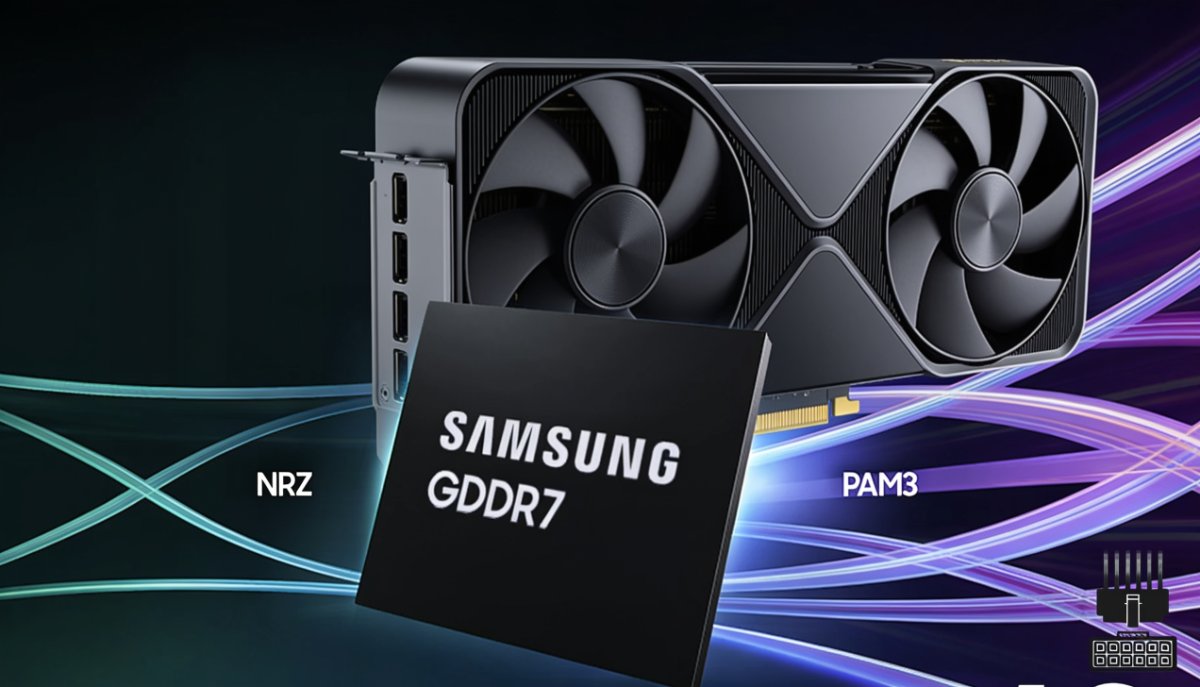
The adoption of GDDR7 memory marks one of the most substantial technical updates in the Blackwell NVIDIA RTX PRO lineup. This new memory standard offers a massive increase in bandwidth over the GDDR6X modules used in the previous generation.
The flagship RTX PRO 6000 comes equipped with 96GB of GDDR7 VRAM . This capacity is double that of the previous generation’s top-tier professional card, providing a significant buffer for high-resolution projects like 8K video editing.
For professionals in fluid dynamics and structural analysis, this expanded memory allows for more detailed simulations. Instead of simplifying models to fit within the GPU’s memory limits, users can maintain high levels of fidelity.
Pricing Reality Check: What Does an RTX PRO Really Cost?
The release of the NVIDIA RTX PRO 6000 Blackwell has triggered a significant debate within the professional visualization and AI sectors. While the new architecture delivers performance leaps, the financial commitment required marks a turning point in the market.
With this level of investment, the conversation has shifted toward the long-term sustainability of such high-performance investments.
The Financial Landscape: Analyzing Price Volatility
The market entry of the RTX PRO 6000 Blackwell has been defined by notable price volatility. There is a significant discrepancy between early market projections and the official direct-to-consumer pricing currently seen on the digital storefront.
When the Blackwell-based professional series was first unveiled at GTC in March 2025, initial estimates suggested an MSRP of approximately $8,565. This figure was widely accepted because it aligned with historical pricing of the “6000” series.
However, the narrative shifted dramatically when NVIDIA updated its official digital storefront. The company currently lists the RTX PRO 6000 Blackwell Workstation Edition at $13,250 . This represents a 73% increase over the lowest observed preorder prices.
Pricing Comparison: Projections vs. Reality
Your ROI Calculator: Step-by-Step Guide to Using the GiniLoh TCO Analyzer
Strategic Financial Analysis of Enterprise GPU Integration
The introduction of the NVIDIA Blackwell architecture needs a more sophisticated approach to calculating TCO. Industry analysts suggest that the initial purchase price often represents less than half of the total lifecycle cost .
You should include energy consumption, maintenance overhead, and the accelerating curve of technological depreciation.
Methodology for TCO Calculation
Analytical frameworks, such as the TCO Analyzer provided by GiniLoh, offer a structured approach to quantifying variables. These tools transition the conversation from “acquisition cost” to “cost per compute hour.” and comparison against renting GPU as a cloud service.
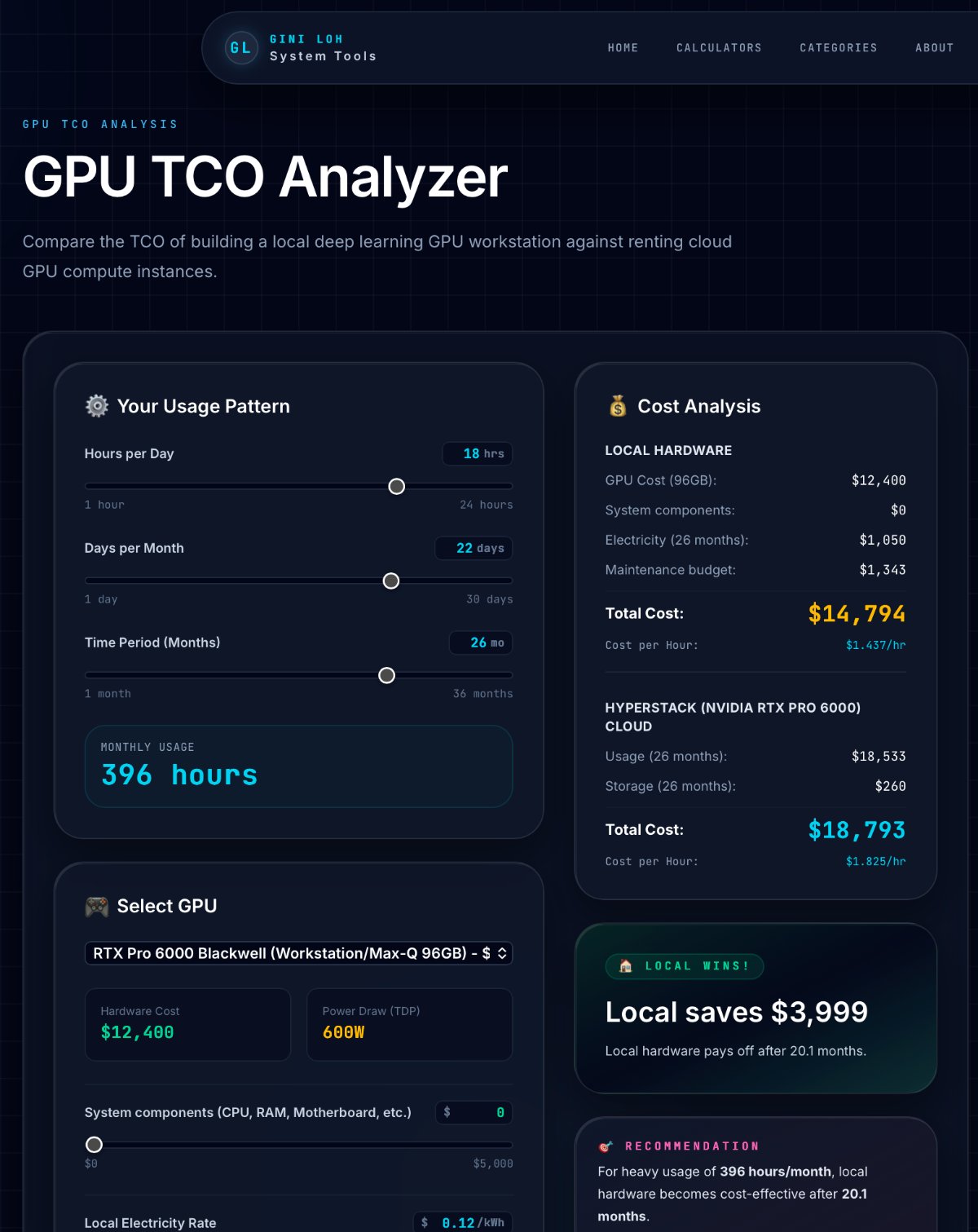
The methodology relies on three distinct phases of analysis: acquisition, operation, and maintenance. Each phase contains its own set of variables that must be carefully weighted based on the organization’s specific environment.
Failure to account for even a single variable, such as the cost of networking cables or software licenses, can lead to significant budget overruns. In the context of the Blackwell architecture, operational variables carry even more weight.
Real-World Performance: Running Llama 3, Blender, and Scientific Simulations
Enterprise-Scale Intelligence: Llama 3 70B Inference
The landscape of LLM deployment has historically been bifurcated between smaller models and massive multi-GPU cluster requirements. Until recently, running a 70-billion-parameter model like Llama 3 on a single workstation was considered unfeasible.
However, the introduction of 96GB of VRAM on the NVIDIA RTX PRO 6000 Blackwell fundamentally alters this dynamic. It allows the entire model weights and the necessary KV cache to reside within a single GPU’s memory buffer.

In practice, this translates to a dramatic increase in inference throughput. For developers, the ability to run Llama 3 70B locally means achieving thousands of tokens per second, facilitating near-instantaneous interaction.
Professional 3D Rendering and Simulation
For organizations, the decision to integrate such high-end hardware requires cost-benefit analysis. The architecture is built to withstand the “long haul” of enterprise-level tasks, featuring 24,064 CUDA cores .
The main purpose for investing in these GPU’s is not necessarily just financial but also strategic. By eliminating the need to send sensitive data to external APIs, the RTX PRO 6000 also addresses the growing demand for data sovereignty. This is critical for private corporate knowledge bases and real-time automated customer service agents.
RTX PRO vs. The (Nvidia) Competition: When Does It Make Sense?
VRAM, Drivers, and the 24/7 Grind
Let’s start with the most obvious cage match: the Nvidia RTX PRO versus the GeForce RTX 4090. On paper, the 4090 is a beast with 16,384 CUDA cores and 24GB of memory . But there is more to the story for professional workloads.
The RTX PRO cards, specifically the RTX PRO 6000 Blackwell, flex 96GB of GDDR7 memory with ECC support . That’s four times the VRAM of the 4090, which is essential for massive datasets and long-running simulations.
Comparison: Professional vs. Consumer Flagships
Beyond Raw Speed: Reliability, Certifications, and Long-Term Value
Why Certifications Matter
For professional work, raw speed isn’t everything. The NVIDIA RTX PRO lineup comes with official ISV certifications for software like SOLIDWORKS, Autodesk, and Ansys . These aren’t just stickers on a box.
These certifications mean NVIDIA has worked directly with software developers to ensure the drivers deliver consistent, accurate results. This prevents random crashes mid-render and ensures that the hardware is reliable for 24/7 operation.
Furthermore, the enterprise-grade support and longer product lifecycles provide peace of mind for IT departments. Unlike consumer cards that may be refreshed annually, the PRO series offers stability for long-term project planning.
When to Rent vs. Buy RTX PRO GPUs: A TCO Framework
An NVIDIA RTX PRO card costs thousands upfront. Cloud GPU rentals seem flexible, but the bills stack up. Where’s the real sweet spot? It depends on your utilization rate and project duration.
If your GPU utilization is above 70% over a 24-month period, purchasing the hardware usually results in a lower TCO for heavy users over a period of 3 years. However, for medium to low loads, short-term bursts or experimental projects, the cloud remains a viable alternative.
Decision Matrix: Renting vs. Buying
The Verdict: Making Your RTX PRO Investment Count
The Bottom Line on RTX PRO
The NVIDIA RTX PRO series, especially the 6000 Blackwell with its 96GB of GDDR7 memory, is a beast. It represents the pinnacle of professional compute, but it requires a sophisticated financial approach to justify the cost.
Whether you are an independent researcher or a large studio, understanding the TCO is the only way to ensure your investment pays off. The NVIDIA RTX PRO is more than just a GPU; it is a foundational component of modern AI and visualization infrastructure.
FAQ
What is the primary difference between the RTX PRO 6000 Blackwell and the consumer GeForce RTX 4090?
The RTX PRO 6000 offers 96GB of GDDR7 memory with ECC support, which is four times the capacity of the RTX 4090. It also features ISV-certified drivers and a higher CUDA core count, making it more suitable for massive datasets and enterprise-level reliability.
Why is the 96GB VRAM capacity significant for AI development?
This expanded memory allows large models, such as Llama 3 70B, to reside entirely within a single GPU’s buffer. This eliminates the need for multi-GPU clusters for many inference tasks and significantly increases throughput for complex AI workloads.
What infrastructure changes are required to support the RTX PRO 6000 Blackwell?
Due to its 600-watt peak power draw, a workstation with multiple cards may require electrical retrofitting to handle the load on standard circuits. Additionally, the high heat density may necessitate advanced cooling solutions, such as liquid cooling, to maintain performance.
How do I determine if I should buy an RTX PRO card or rent cloud compute?
Purchasing hardware typically offers a better return on investment if your GPU utilization exceeds 40% over a 12-month period. Cloud rentals are better suited for short-term projects or when preserving immediate cash flow is a priority for a startup.
What are ISV certifications and why do they matter for professionals?
Independent Software Vendor (ISV) certifications ensure that the hardware and drivers are optimized and tested for stability with professional applications like AutoCAD, SOLIDWORKS, and Ansys. These certifications minimize system crashes and ensure data accuracy during complex simulations and renders.
Does the RTX PRO series support data sovereignty?
Yes, by allowing large-scale AI models to run locally on a single workstation, the RTX PRO series enables organizations to keep sensitive data on-premise. This removes the need to send proprietary information to external cloud APIs, ensuring maximum security and control over corporate knowledge bases.
Is the RTX PRO 4500 a viable alternative to the flagship 6000 model?
The RTX PRO 4500 is an excellent choice for edge-based inference or smaller workloads due to its much lower 165-watt power consumption. It provides a more cost-effective entry point for users who do not require the massive 96GB frame buffer of the flagship model.
References
[1] Generative AI: Create content, analyze data, and keep everything private on your device with NVIDIA.
[2] NVIDIA RTX PRO 6000 Series accelerates the full spectrum of AI and creative workloads from agentic A.
[3] Tackle demanding projects in design, simulation, and AI with unmatched speed and precision.
[4] The NVIDIA RTX PRO 6000 Blackwell Workstation Edition is the most powerful desktop GPU ever created,.
[5] Access the most demanding applications from anywhere, with awe-inspiring performance that rivals phy.
[6] Figure 1 shows NVIDIA internal measurements showcasing throughput performance on NVIDIA GeForce RTX.