
Sixty-five percent of tenants pay a lease termination fee without ever calculating the true cost of breaking a lease through subletting—which can sometimes be even more expensive.
Comparing the upfront cost of a lease termination fee against the time and effort of finding a subtenant reveals that for most renters, breaking a lease through subletting is the more financially prudent strategy.
Cost of Breaking a Lease: Termination Fees vs. Subletting in 2026
Key Takeaways
- Breaking a lease typically costs between one and three months’ rent, but total expenses can climb higher when you factor in lost deposits and ongoing rent obligations.
- Some states legally cap what landlords can charge, while others let the lease agreement dictate the penalty.
- You almost always have the right to request a written breakdown of fees — and using a lease termination fee calculator before making any moves can save you from nasty surprises.
Introduction: The True Cost of Breaking a Lease in 2026
Here’s the short answer to a question nobody wants to ask: the cost breaking lease typically lands between two and four months’ rent, according to industry data . If your monthly rent is $1, 700, that’s a bill between $3, 400 and $6, 800 just to walk away. Ouch.
But here’s the thing—you don’t always have to pay that. Subletting is the alternative that can save you thousands. Though, honestly? It takes time, effort, and your landlord’s okay. So which route makes sense for your 2026 summer rental situation? Let’s actually compare the numbers.
What You’re Actually Looking At: The Two Paths
Breaking a lease means ending a legal agreement early, and most landlords protect themselves with fees . There are basically two ways this plays out: you either pay a penalty and walk, or you find someone to take over your place. The math changes depending on which path you choose.
See the gap?
Lease Termination Fees: What You Owe When Breaking a Lease
So, What Does It Actually Cost to Break a Lease?
Look, if you’re searching for the cost breaking lease, you’re probably already stressed. And honestly? The number you see in your lease might not tell the whole story. Most standard apartment leases include an early termination fee equal to one to three months’ rent. On a $1, 800-a-month apartment, that’s $1, 800 to $5, 400 right off the bat. But that’s just the beginning.
Some landlords also keep your security deposit — even if you left the place spotless. Others require you to keep paying rent every month until they find a new tenant. And if the rental market is slow? You could be on the hook for months.
Here’s the thing: The lease termination fee itself is often spelled out clearly in your contract. But a lot of people miss the fine print that says something like “tenant liable for all rent until re-rented. ” That’s where the real cost hides. One study found that the true cost of breaking a lease — including lost deposits, advertising fees, and penalties — can range from $3, 600 to over $10, 800 on that same $1, 800 apartment. Yikes.
How State Laws Change the Math
Not every state lets landlords charge whatever they want. Some states cap the lease termination fee at a specific dollar amount or limit it to a percentage of the remaining rent. Others require landlords to “mitigate damages, ” meaning they have to actively try to re-rent the unit before they can keep charging you.

This is where the lease break vs sublet decision really matters. If your state caps fees, paying the penalty might be cheaper than the hassle of finding a subletter. But if you live in a state where you’re liable for every month until re-rented, a lease break sublet arrangement might save you thousands.
Subletting vs. Breaking Lease: A Direct Cost Comparison
So you need to get out of your apartment, and you’re staring down two ugly options: pay a massive penalty to break the lease, or go through the headache of finding someone to take it over. Which one actually saves you money? Let’s be real—the cost breaking lease conversation usually stops at “it’s expensive. ” But the lease break vs sublet decision is way more nuanced than that.
What you’re actually paying for
Here’s the thing about breaking a lease—it’s brutally predictable. Most landlords charge a flat lease termination fee equal to two or three months’ rent . I’ve seen leases where it’s a flat $3, 000, others where it’s four months’ rent. You write the check, and you’re done. No drama.
Subletting, on the other hand. well, it’s a different beast entirely. You avoid that termination fee, absolutely. But you’re trading a fixed cost for what I’d call a “time tax. ” Finding someone qualified takes forever. You’re posting listings, showing the place at weird hours, running credit checks. And here’s the kicker—you’re still legally on the hook if your subtenant stops paying .
The math gets interesting in expensive cities
Okay, let’s run some real numbers because this is where the lease break vs sublet question gets fascinating. Say you’re in New York or San Francisco, paying $3, 500 a month for a one-bedroom. Breaking that lease? You’re looking at probably $7, 000 to $14, 000 depending on your terms .

Subletting. costs you nothing in fees. But it costs you sanity. You’ve got to vet people, hope your landlord approves the subtenant, and pray they actually pay rent. One bad subletter and you’re still on the hook for every dollar.
I used a lease termination fee calculator recently for a friend in Chicago, and honestly? The numbers were wild. Her lease had a “reletting fee” plus she had to keep paying until a new tenant was found . That’s a double whammy.
Hidden Costs of Breaking a Lease: Beyond the Termination Fee
So you’re thinking about breaking your lease. You’ve probably braced yourself for that big, scary lease termination fee. Maybe you’ve even run the numbers through a lease termination fee calculator and told yourself, “Okay, I can afford this. ” But here’s the thing—that fee is just the tip of the iceberg. The real cost breaking lease is almost always higher than you expect, and those hidden expenses can turn a manageable move into a genuine financial headache.
You Lose More Than Just the Fee
Here’s what most people don’t account for: your security deposit. When you break a lease early, you essentially hand your landlord a reason to keep it. And it’s not even shady—many leases explicitly state that breaking the terms voids your right to get that money back. On a typical apartment, that’s anywhere from one to two months’ rent gone. So on a $1, 800/month place, you’re already out $3, 600 in fees, and now you’ve lost another $1, 800 from the deposit. That’s $5, 400 before you’ve even moved a single box.
Then, there are the utility early termination fees. You probably signed up for internet, gas, and electricity when you moved in. What you might not remember is that some providers charge a penalty if you cancel before your contract ends. Those fees usually run between $50 and $200 each. Add moving costs—hiring movers, renting a truck, buying boxes—and suddenly the “simple” lease break could set you back anywhere from $3, 600 to $10, 800, according to industry estimates.
The Real Hidden Cost: Your Rental Credit Score
Honestly, the most sneaky expense isn’t even money you pay today. It’s the damage to your rental credit score. If your landlord reports the broken lease to a tenant screening agency, future landlords will see it. They might deny your application or demand a higher security deposit. One bad mark can make it harder to rent for years. That’s not a line item on a bill, but it sure costs you in the long run.
And landlords aren’t done charging you yet. Most will tack on advertising or administrative fees for re-renting the unit. They say it covers the cost of listing the apartment, showing it to new tenants, and processing applications. These can run from a few hundred dollars up to a full month’s rent.
Breaking Lease vs. Sublet: Know Your Rights
If you’re staring at this mountain of costs, you might be wondering about a lease break sublet. Subletting is often the smarter financial move—you find someone to take over your payments and avoid most of those penalties. But here’s the catch: not all leases allow it. You have to check your contract first. If subletting is an option, you can dodge the termination fee, keep your deposit, and preserve your rental history. It takes more work, sure.
How to Sublet Your Lease: A Step-by-Step Cost-Saving Strategy
Look, if you’re thinking about breaking your lease, you already know the numbers are ugly. We’re talking two to four months’ rent just to walk away—sometimes more if your landlord drags their feet finding a new tenant . That’s brutal. But here’s the thing: subletting exists. It’s not a loophole exactly, but it’s the closest thing to a escape hatch most renters have.
Let me walk you through it.
—
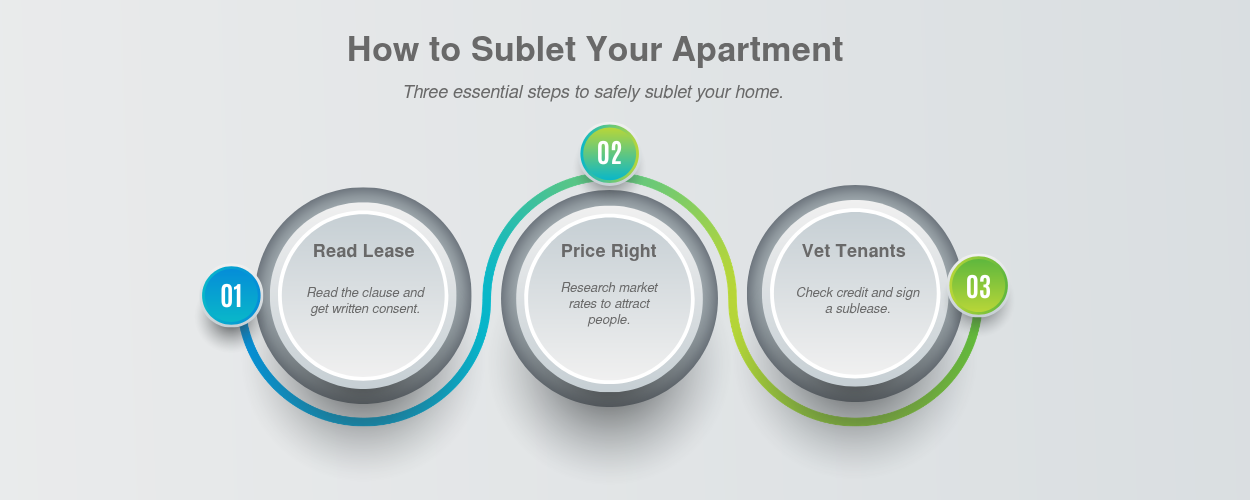
Step 1: Actually read your damn lease
I know, I know. Nobody reads their lease. It’s forty pages of legalese that makes you want to nap. But you need to find the subletting clause. Some landlords ban it outright. Others let you do it but require their approval first—and they can say no for basically any reason .
Here’s what you do: find the clause, then email your landlord. Don’t ask permission in person where they can dodge you. Get it in writing. Say something like “I’m exploring subletting options per Section 12 of my lease and wanted to confirm your process for approval. ” Sound professional but friendly. Most landlords would rather have a vetted subtenant than chase you for months of unpaid rent .
Oh, and some leases also have early termination clauses where you can just pay a flat fee and bounce . Check for that first—honestly, sometimes that’s cheaper and easier than subletting.
—
Step 2: Price it right (not what you wish you could charge)
Here’s where people get greedy and screw themselves. You want to cover your rent and utilities—I get it. But the market doesn’t care about your broke-ass budget. If your apartment is overpriced, nobody’s biting.
Look at comparable listings in your building and neighborhood. Price yours slightly under market if you can afford it. A subtenant paying $50 less per month for six months is way better than you paying the full rent for three months while you wait. That’s $300 lost versus—what, $3, 000? Do the math.
And yeah, you can ask for a security deposit from them. Do that.
—
Step 3: Actually vet the person living in your home
This is where people get lazy. Don’t.
You need a credit check. You need proof of income—pay stubs, bank statements, something. You need to talk to them on the phone and get a vibe. Does their story make sense? Are they evasive about their job? Trust your gut.
Then—and this is non-negotiable—write a sublease agreement. Not a handshake. Not a text message. A real document that says who pays what, when, and what happens if they don’t . Include the lease terms they’re agreeing to follow. No pets unless your lease allows it. No smoking if your lease bans it.
Get it signed. Keep copies. Send one to your landlord if they require it.
—
Look, subletting is work.
Using a Lease Termination Fee Calculator to Make the Right Call
How Much Does It Really Cost to Break a Lease? Let’s Crunch the Numbers
Look, nobody signs a lease thinking they’ll need to bail early. But life happens—a job transfer to Austin, a surprise breakup, maybe just the realization that the “charming” basement apartment is actually a moldy dungeon. The question everyone asks is: what’s the actual cost breaking lease? And the answer is almost never a simple number. According to data from the rental industry, breaking an apartment lease early typically costs between two and four months’ rent . But that flat fee depends on your contract and where you live. Some leases demand a fixed lease termination fee, while others make you pay until a new tenant is found . That’s where a lease termination fee calculator becomes your best friend—it takes your specific rent, remaining term, and local laws and spits out a number you can actually work with.
How Lease Termination Fee Calculators Actually Work
These online tools aren’t magic. They just do the math faster than your brain can. You punch in your monthly rent (say, $1, 500), how many months are left (maybe six), and your state (Texas, Florida, Illinois—each has different rules). The calculator then factors in things like the early termination clause in your lease and state-specific caps. For example, in Florida, landlords can’t just charge whatever they want—the cost is tied to the remaining rent and the landlord’s duty to re-rent the unit . In Chicago, the law even limits what landlords can collect if they don’t follow proper procedures . A good calculator accounts for all that messiness. And the best part? Most are free and give you instant results . No spreadsheets. No headache.
Lease Break vs Sublet: Which Option Saves You More?
Once the calculator gives you a number—let’s say $4, 500—you need to weigh that against the alternative: finding someone to take over your lease. This is the classic lease break vs sublet dilemma. Subletting sounds great, but it comes with its own costs: listing fees, showing time, and the risk the subtenant flakes. Some landlords charge a sublet fee, too. So how do you compare?
Conclusion: Weighing the Financial and Practical Trade-Offs
Termination Fees vs. Subletting: What Actually Costs More?
Look, here’s the thing about the cost breaking lease question that everyone wants a straight answer for: it really depends on which path you take. And honestly, neither option is perfect. A lease termination fee gives you something valuable—certainty. You pay the fee, you walk away, done. According to industry data, breaking an apartment lease early typically costs between 2 to 4 months’ rent as a flat penalty . For a $1, 700 monthly rent, that’s somewhere around $3, 400 to $6, 800. Painful? Sure. But it’s a known number.
Subletting? That’s a different beast entirely. A lease break sublet strategy can save you thousands—you’re not paying that termination fee after all. But it demands real work. You’ve gotta find a qualified tenant, convince your landlord to approve them, handle the paperwork, and pray the new person doesn’t trash the place. One property management source notes that while subletting sounds great in theory, the time and hassle factor is very real . So it’s not just about money—it’s about what your time and sanity are worth.
FAQ
1. How much does it usually cost to break a lease?
Breaking a lease typically costs between two and four months’ rent, although many lease termination fees are closer to one to three months’ rent. For example, if your rent is $1,700 per month, the cost could range from about $3,400 to $6,800.
2. Is the lease termination fee the only cost I should expect?
No. The termination fee may only be part of the total cost. You may also lose your security deposit, owe rent until the landlord finds a new tenant, pay advertising or administrative fees, and face utility cancellation fees.
3. Can my landlord keep charging me rent after I break the lease?
In some cases, yes. Some leases say the tenant remains responsible for rent until the unit is re-rented. However, in many states, landlords must make a reasonable effort to find a replacement tenant instead of simply charging you indefinitely.
4. Is subletting cheaper than breaking a lease?
Subletting can be cheaper because it may help you avoid a large termination fee. However, it requires more effort, including finding a qualified tenant, getting landlord approval, preparing paperwork, and staying responsible if the subtenant fails to pay.
5. What is the main difference between breaking a lease and subletting?
Breaking a lease usually means paying a fixed fee and ending your responsibility sooner. Subletting means someone else pays rent while you remain legally connected to the lease until it ends.
6. Do all leases allow subletting?
No. Some leases ban subletting completely, while others allow it only with landlord approval. You should check the subletting clause in your lease and get permission in writing before moving forward.
7. What hidden costs should I watch for when breaking a lease?
Common hidden costs include losing your security deposit, paying rent until the unit is re-rented, utility cancellation fees, moving expenses, advertising fees, and possible damage to your rental history.
References
[1] Once the landlord finds a new tenant, the lease-breaking tenant is responsible for paying the differ.
[2] This guide discusses the costs of breaking a lease, the circumstances under which tenants can exit t.
[3] Breaking a lease in Arizona can be a complex and legally sensitive process for both landlords and te.
[4] Tenants who sublet or sublease without approval also face significant consequences: Lease terminatio.
[5] It is essential to understand three.
[6] – **Even if a lease is broken without legal justification**, landlords still must follow specific ru.